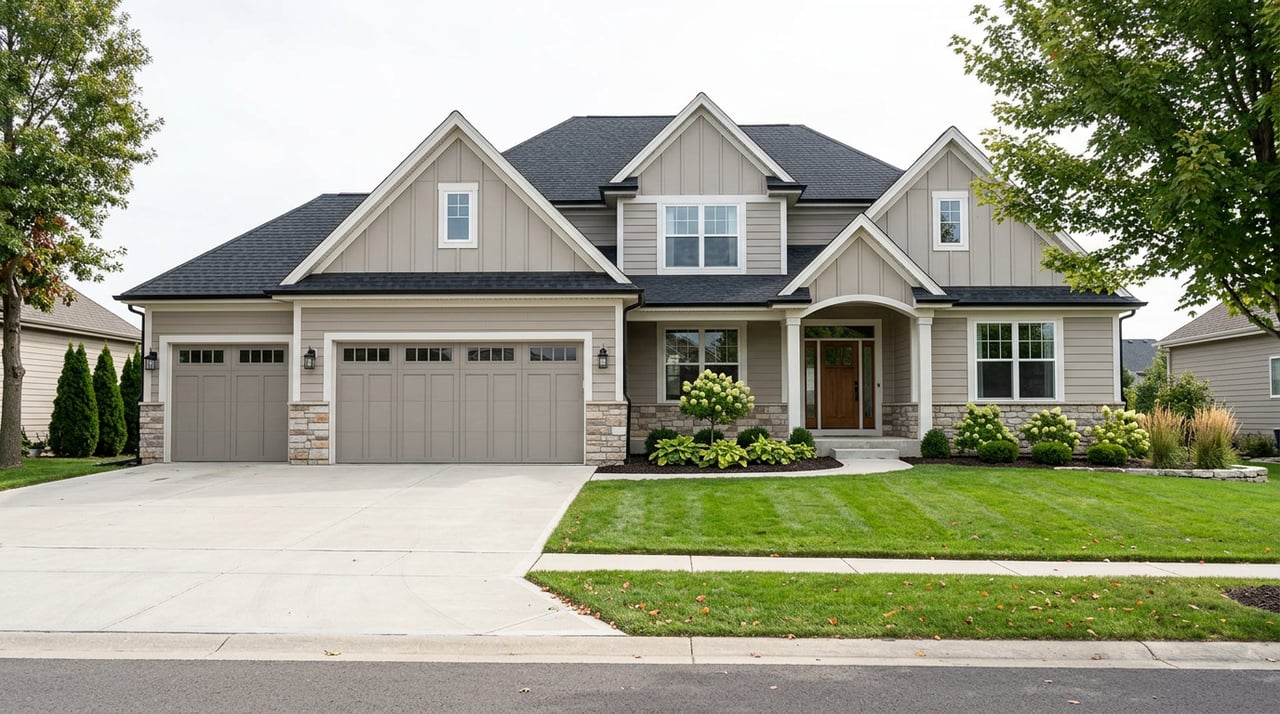
Is your Gurnee starter home starting to feel tight? You are not alone. Many local homeowners are ready for more bedrooms, a bigger yard, or a better layout but want to move up without overextending. In this guide, you will learn how the Gurnee market looks right now, which move-up path fits your situation, the financing tools that can bridge the gap, and what to watch for in local homes. Let’s dive in.
Gurnee market snapshot in early 2026
Gurnee remains a mid-priced Chicago suburb. Depending on the data source and timing, recent median values range roughly from the mid-$300s to just over $400k. For example, Redfin reported a citywide median sale price near $405,000 in Jan 2026. Zillow’s index showed an average home value around $356,700 through Jan 31, 2026, and Realtor.com noted a median list/sale snapshot near $347,250 in Dec 2025. These differences reflect method and reporting windows, so use the range as a guide and confirm current comps when you are ready to act.
Speed-to-contract can vary by price and condition. Recent snapshots showed averages from about three to ten weeks, with well-priced homes still attracting strong interest. The takeaway for you: conditions in Gurnee have shifted between balanced and moderately competitive, and the best listings can still see multiple offers.
Mortgage rates matter for move-up budgets. After a choppy 2025, national 30-year averages moved back toward 6% in early 2026. Freddie Mac’s weekly survey put the average near 5.98% the week of Feb 26, 2026, as shared in a recent summary of the Primary Mortgage Market Survey. You can also check the latest daily lender averages, which hovered around 6.0% to 6.1% in late February 2026. Your quote will vary based on credit, down payment, and loan type.
- See rates context: Freddie Mac PMMS trend summary and Bankrate’s daily survey.
Define your move-up budget
In Gurnee, a practical mid-range for single-family move-up homes is about $300,000 to $450,000. This band brackets recent medians and captures the most active mid-tier inventory. Treat it as a flexible guide based on your needs, location, and condition preferences.
Build your budget from the ground up:
- Get a full lender pre-approval so you know exactly what you can carry at today’s rates.
- Estimate net proceeds from your current home to size your down payment.
- Compare property taxes and insurance on target homes to your current carrying costs.
Choose your path: sell first, buy first, or coordinate
You have three practical paths. Each one trades timing, cost, and convenience in different ways.
Sell first (list, then buy)
- Pros: No need to carry two mortgages, stronger purchase offers, and clear cash-on-hand.
- Cons: You may need temporary housing or a rent-back, and you could move twice.
- Typical timing: 2 to 6 weeks to prep and list, 2 to 6 weeks to go under contract depending on price tier, then 30 to 45 days to close. Once you sell, you shop and write non-contingent offers with confidence.
Tip: If you go this route, ask about a short post-closing occupancy (rent-back) to give yourself cushion to find your next place.
Buy first (find, then sell)
- Pros: One move, you can lock a home you love, and you control timing.
- Cons: You might carry two loans for a period, underwriting can be stricter, and you could feel pressure to price your sale aggressively.
- How to make it work: Consider short-term funding like a bridge loan or a HELOC to cover your down payment. A strong pre-approval that shows you can carry both payments can help you win a non-contingent offer.
Learn more about bridge loans from Experian’s consumer guide.
Same-day or coordinated closings
- Pros: You move once and use the sale proceeds to fund your purchase right away.
- Cons: It requires tight coordination among both sides’ lenders, attorneys, and title companies. A delay on either file can ripple into the other.
- How to prepare: Build conservative timelines into your contracts and confirm your lenders and title companies can support a back-to-back schedule.
Contract tools that keep you in control
Home-sale contingency
A home-sale contingency makes your purchase offer conditional on closing the sale of your current home. It can protect you if timelines slip. In more competitive situations, sellers may see this as a weaker term and look for stronger price or earnest money to offset the risk. If your offer includes this contingency, show that your home is actively marketed and positioned to sell quickly.
What helps:
- A signed listing agreement and evidence of recent showings
- A realistic pricing strategy and pre-inspection to reduce surprises
- Flexible closing dates and higher earnest money when feasible
Kick-out clause (often 24 to 72 hours)
If a seller accepts your contingent offer, they might request a kick-out clause. This lets them keep showing the home and accept a stronger non-contingent offer. If that happens, you have a short window to remove your contingency and proceed, or step aside. The time window, proof-of-funds, and lender verification are all negotiable terms. Clarify these details upfront.
Smart funding to bridge the gap
Bridge loans
A bridge loan taps your existing equity to fund a new purchase before your current home sells. These short-term loans usually run 6 to 12 months and often carry higher rates and fees than a standard mortgage. They can help you write a non-contingent offer, but you must be comfortable carrying two payments if your home takes longer to sell. See Experian’s overview of bridge loans for a plain-English explanation.
HELOC or home equity loan
A HELOC is a revolving line of credit secured by your current home. A home equity loan is a fixed, lump-sum second mortgage. Both can fund down payments and are often less expensive than bridge loans, though HELOC rates are typically variable. Some lenders require payoff at sale, so confirm terms. Compare options using this HELOC vs. bridge loan comparison.
Sale-leaseback or rent-back
If you sell first, negotiate a short-term rent-back so you can stay in your home briefly after closing. This can remove the pressure to rush into your next purchase. Put key terms in writing, including monthly rent, insurance responsibility, damage coverage, and a firm move-out date.
How lenders view two loans
If you plan to carry two mortgages temporarily, expect stricter underwriting. Lenders will review your debt-to-income ratio, cash reserves, and loan-to-value closely. Ask your lender for a written pre-approval that clearly reflects your plan. For rate context, check Bankrate’s daily survey.
What to look for in Gurnee’s mid-range homes
Common features and layout wins
In Gurnee’s mid-range, you will often see 3 to 4 bedrooms, 2 or more bathrooms, attached 2-car garages, and finished or finishable basements. Many homes were built in the 1980s to 2000s, with pockets of newer construction. If space is the goal, focus on usable square footage and flexible layouts. A first-floor office or guest room, a mudroom, and a practical basement finish can add real day-to-day value.
Condition checks that matter locally
Northern Illinois weather and home ages create a few repeat inspection priorities:
- Moisture or basement water intrusion
- Roof age and ice-dam risk
- Freeze-thaw wear on exterior elements and driveways
- Older electrical panels, plus HVAC and water heater age
- If the property has a well or septic, test early and confirm maintenance records
Schools and attendance boundaries
School districts often shape move-up choices. Most Gurnee addresses are served by Gurnee School District 56 for K–8 and feed into Warren Township High School District 121 for high school. Some areas intersect Woodland CCSD 50. Always verify attendance boundaries and current information directly with district offices. Start with the District 56 site for local context.
Commute and transit
Gurnee is primarily car-oriented, with I-94 and US-41 as the major corridors. The village does not have a dedicated Metra station; the nearest options are typically in Waukegan, Grayslake, or Round Lake Beach. Map your peak-time drive from each candidate neighborhood rather than relying on averages. Use a local map tool like this Gurnee overview map to visualize routes.
Taxes and carrying costs
Property taxes are a major line item. Lake County, Illinois, generally posts higher median property tax bills and effective rates than neighboring Kenosha County, Wisconsin, based on the Tax Foundation’s county dataset. If you are comparing homes near the state line, factor taxes into your long-term monthly budget and confirm the exact bill for each property.
Two sample timelines
Sell-first quick plan
- Weeks −6 to 0: Prep the house, handle minor repairs, declutter, and stage. Request a comparative market analysis and a net-proceeds estimate. Get a purchase pre-approval so your budget is set.
- Week 0: List the home.
- Weeks 2 to 6: Accept an offer. Plan for a 30 to 45 day escrow. Consider a rent-back to ease timing.
- Weeks 6 to 12: With proceeds in hand, shop and write non-contingent offers on your next home.
Buy-first with bridge or HELOC
- Weeks −8 to 0: Work with your lender on feasibility for a bridge loan or HELOC. Secure a pre-approval that supports a non-contingent offer.
- Week 0: Submit a strong offer on the next home, backed by proof of funds and lender letters.
- After acceptance: Close on your purchase. Launch the sale of your current home with a clear timeline and moving plan.
Move-up checklist for Gurnee buyers
Financial
- Full lender pre-approval and a written plan if carrying two loans
- Estimated net proceeds from your sale and target down payment
- Property tax comparison and updated insurance quotes
- Rate context: Bankrate daily survey and Freddie Mac PMMS trend summary
Transactional
- Listing prep calendar, pre-inspection options, and staging list
- Offer strategy: home-sale contingency language and potential kick-out terms
- Rent-back agreement points: rent amount, insurance, move-out date
Practical
- Moving plan and budget for one move vs. two moves
- Commute-time tests for short-list neighborhoods
- Basement finish plan and realistic livable square footage count
Disclosure timelines you should know
Illinois sellers: You must complete the Illinois Residential Real Property Disclosure Report under the state’s Residential Real Property Disclosure Act. Delivery is required before the buyer signs an agreement that requires acceptance of the transfer. Learn more from the statutory text at Justia’s Illinois code library.
Wisconsin sellers: If you consider cross-border moves or selling a Wisconsin property, the state requires a Residential Real Estate Condition Report. Buyers who do not receive the report within the statutory window often have rescission rights. See details in Wisconsin Statutes Chapter 709.
Your next step
If you are thinking about moving up in Gurnee, start with two items: a strong lender pre-approval and a clear pricing plan for your current home. From there, you can choose the best path for your timing, weigh bridge or HELOC options, and target the right neighborhoods with confidence. If you would like a calm, local plan tailored to your family, connect with Deena Allie to schedule a consultation.
FAQs
What is a realistic mid-range price for Gurnee in 2026?
- Recent medians span roughly $340k to $410k depending on source and month, so many move-up buyers target $300k to $450k and fine-tune after getting comps.
How fast are Gurnee homes selling right now?
- Speed varies by price and condition, with recent averages ranging from about three to ten weeks and well-priced listings still drawing strong interest.
How does a home-sale contingency work for a Gurnee purchase?
- Your purchase depends on selling your current home, which protects you but can weaken your offer unless you pair it with strong pricing, earnest money, and proof your home is market-ready.
What are my options if I need to buy before I sell?
- Many buyers use a bridge loan or a HELOC to fund the down payment, then sell soon after closing on the new home to reduce carrying time and interest costs.
Does Gurnee have a Metra station for commuters?
- No, Gurnee does not have a dedicated Metra station; common alternatives are Waukegan, Grayslake, or Round Lake Beach, so test your routes at rush hour.
Are Lake County property taxes higher than Kenosha County?
- Generally yes; the Tax Foundation’s county dataset shows Lake County’s median bills and effective rates are higher than Kenosha County, so compare property-specific tax estimates.